Previous Editions
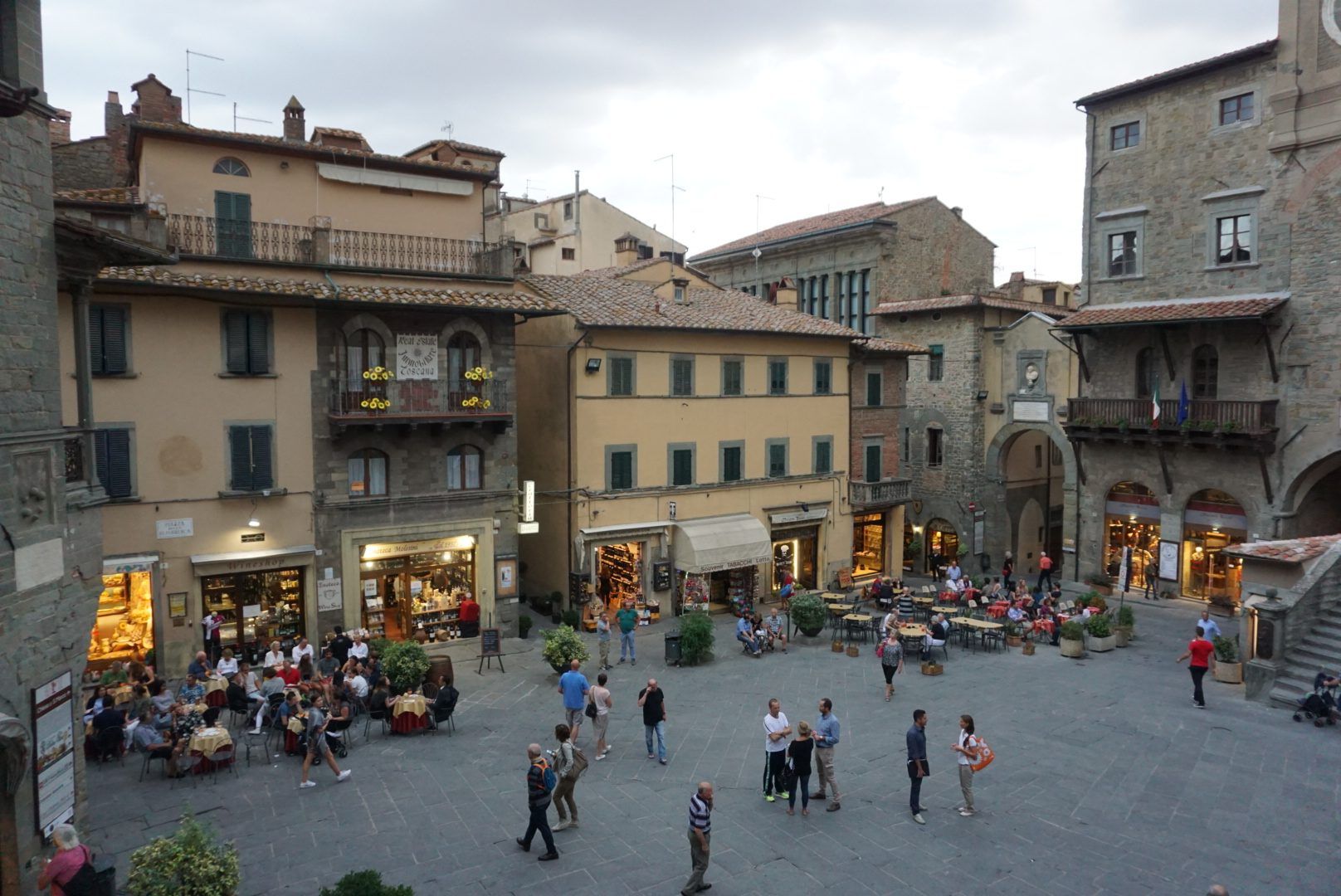
The people, places and questions of Cortona Week since 1985.
36 editions since 1985
1985 Cortona 1·1986 Cortona 2·1988 Perception·1989 Utopia & Science·1991 Metamorphosis·1992 Borders & Limits·1994 Mythos & Science·1995 The Many Ways·1996 Inside – Outside·1997 Becoming – Being – Passing Away·1998 Future Visions·1999 Continuity & Jumps·2000 Creation·2001 Science & Emotions·2002 Global – Local·2003 Curiosity & Creativity·2004 Mind Matters·2005 Beauty·2006 Sign Symbols Codes·2007 Ties & Webs·2008 Knowledge Vs Belief·2009 Bridges over Troubled Waters·2010 Labyrinth·2011 Plausibilities·2012 No Time at All!·2013 Non Local·2014 I·2015 Reproducibility·2016 Uncertainty & Serendipity·2017 Concepts on the Move·2018 Ecology of Mind and Matter·2019 Being Human in a Technological World·2021 Cortona Pearls·2022 Rinascita / Rebirth·2023 & 2024 Science and the Wholeness of Life
Cortona, Hotel Oasi
1985–2017
For thirty editions, Cortona Week took place in a former monastery on a Tuscan hillside with the support of ETH Zurich. Pier Luigi Luisi founded and directed it until he retired from ETH in 2003. Reinhard Nesper, ETH Prof of Chemistry led it until 2014, followed by Gerd Folkers, ETH Prof of Pharmaceutical Chemistry from 2015 to 2017. Each edition took up a question of its time: Perception. Utopia & Science. Metamorphosis. Borders & Limits. Beauty. Non Local. I. Reproducibility. Uncertainty & Serendipity. Concepts on the Move.
The community carries the week
2018–2024
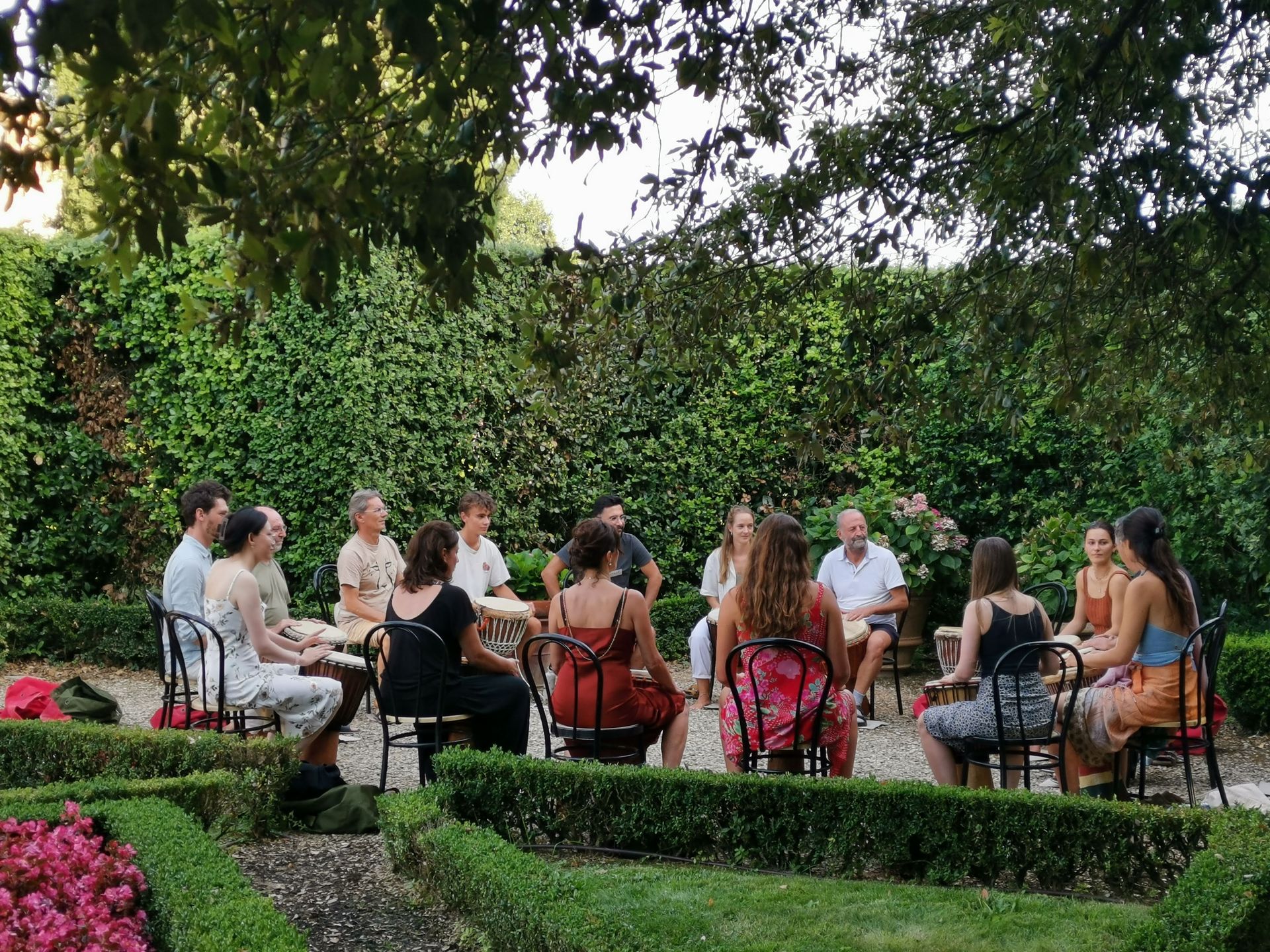
After ETH Zurich ended its support, alumni and organisers continued Cortona Week independently under Pier Luigi Luisi’s leadership. Editions took place in Todi in 2018 and 2019. The residential week paused in 2020 due to COVID-19 pandemic restrictions, and in 2021 the community created Cortona Pearls online to keep the Cortona Week flame alive. Residential editions resumed at the Certosa di Pontignano near Siena in 2022 and 2023, and at the Fraternità San Leonardo al Palco near Prato in 2024. Across these years, the organisers held six editions in four settings without the support of a university or other host institution.
The Cortona Week Association
2026
Prof. Luisi passed away in 2025, leaving a strong community, determined to continue his visionary work. In 2026, the Cortona Week Association was founded in Switzerland to provide a stable organisational base to bring future editions to life.
People who taught here
Brother David Steindl-Rast, 1985, 1991 - 2019
Benedictine monk, author and interfaith scholar
Francisco Varela, 1985, 1986, 1988, 1991, 1992
neuroscientist, biologist and philosopher
Morris Berman, 1985
cultural historian and social critic
David Bohm, 1985
theoretical physicist
Fritjof Capra, 1985, 1998
physicist and systems theorist
Albert Hofmann, 1985, 1986, 1991
chemist and discoverer of LSD
Alexander Lowen, 1985
physician and psychotherapist, founder of bioenergetic analysis
Rupert Sheldrake, 1985, 2005
biologist and author
Paul Watzlawick, 1988
psychologist, communication theorist and philosopher
Humberto Maturana, 1989
biologist, philosopher and co-developer of autopoiesis theory
Chaturvedi Badrinath, 1985, 1989, 1991
philosopher, author and civil servant
Hans Primas, 1989, 1991, 1992
theoretical chemist and philosopher of science
Terence McKenna, 1992
ethnobotanist, philosopher and author
Tullio Regge, 1992, 1994
theoretical physicist
Adolf Muschg, 1995
writer and literary scholar
Iso Camartin, 1995, 1996 - 1999, 2009 - 2014
writer and cultural critic
Andrew Lange, 1996
astrophysicist and cosmologist
William Irwin Thompson, 1985, 1986, 1996
cultural historian, philosopher and social thinker
Chungliang “Al” Huang, 1998, 2008, 2010, 2013
philosopher, author and Tai Ji master
Lynn Margulis, 1998
evolutionary biologist
Avshalom Elitzur, 2002, 2003, 2004, 2005, 2007
physicist and philosopher
Stuart Kauffman, 2003, 2004, 2023
theoretical biologist and complexity scientist
Luca Lombardi, 2003, 2004
composer and musicologist
Joan Halifax, 1995, 2005
Zen Buddhist teacher and anthropologist
Michel Bitbol, 2005, 2006, 2018, 2019
philosopher of science, specialising in quantum physics
Anton Zeilinger, 2007
quantum physicist and Nobel laureate
Roald Hoffmann, 2007
theoretical chemist, Nobel laureate and writer
Wolf Singer, 2008
neuroscientist
Richard R. Ernst, 1998, 2009, 2010
chemist and Nobel Prize laureate
Bernard Lietaer, 2009
economist and monetary systems expert
Max Velmans, 2009, 2014
psychologist and consciousness researcher
Vittorio Gallese, 2010
neuroscientist and co-discoverer of mirror neurons
Hans-Jörg Rheinberger, 2013
molecular biologist and historian of science
Renuka Singh, 1998, 2001, 2003, 2018, 2019, 2022
sociologist and scholar of Buddhism and gender studies
Federico Faggin, 2018, 2019, 2022, 2023, 2024
physicist and engineer, co-inventor of the first commercial microprocessor
Marko Pogačnik, 1994, 2018, 2019, 2022, 2023
artist, author and geomancy practitioner
Cliff Saron, 1991, 2018, 2019, 2022
neuroscientist and contemplative science researcher
Ernesto Burgio, 2018, 2019, 2022, 2023
paediatrician and researcher in environmental epigenetics
Ben Hurlbut, 2019
historian of science and bioethics scholar
Tania Singer, 2008, 2019
neuroscientist and social neuroscience researcher
Archive gallery
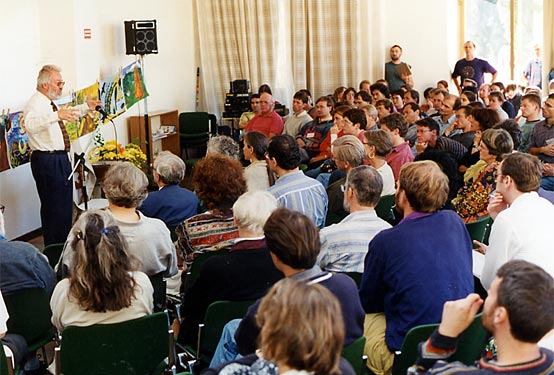
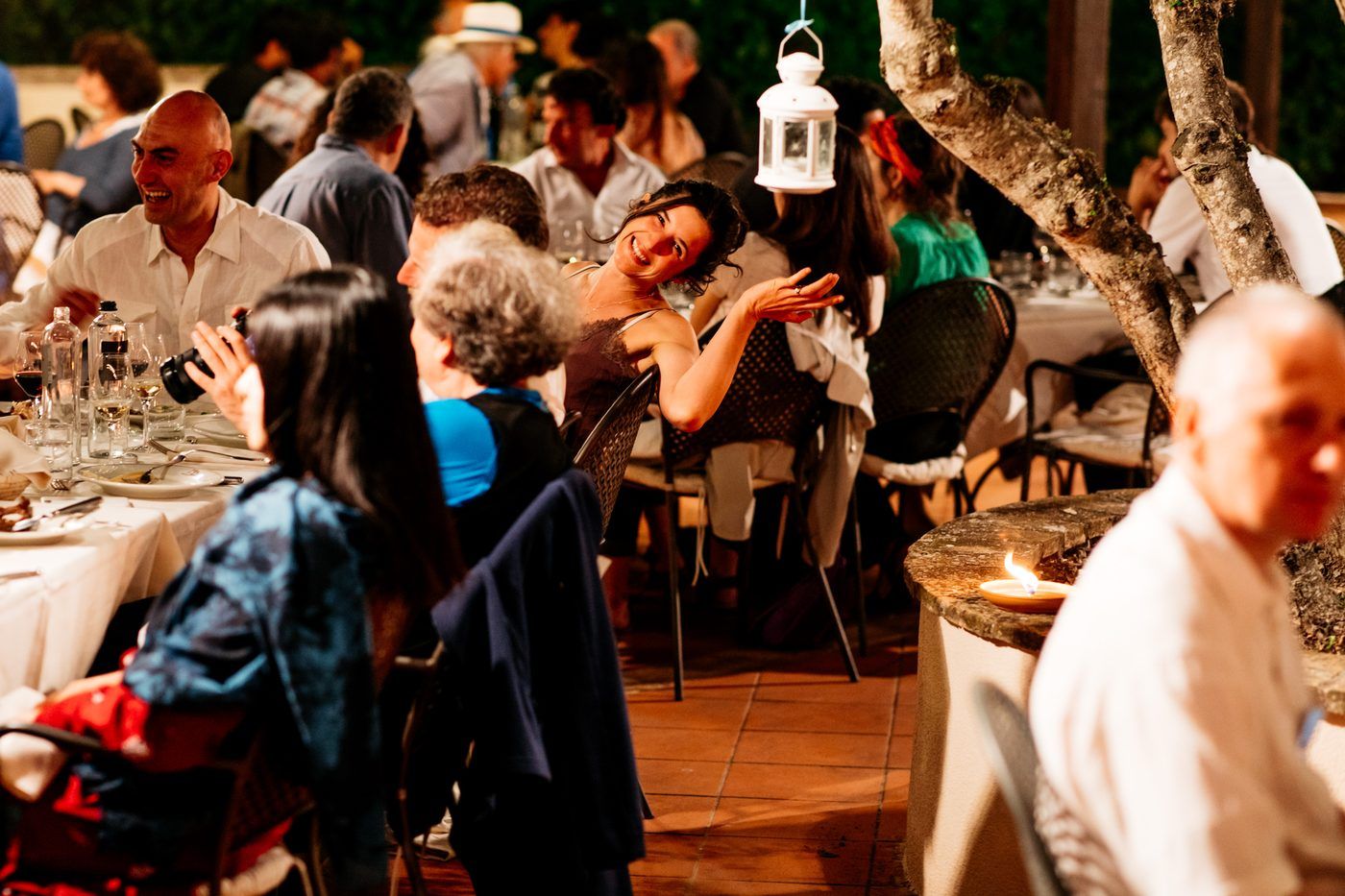
1996 · Stone carving along the monastery wall 1986 · A question gathers its own circle 1997 · The lecture room becomes a shared inquiry Early 2000s · The long table lunch in the garden 1998 · Finding a shared language through rhythm 2022 · A workshop in the cloister at Certosa di Pontignano 1999 · The room gathers around a question 2003 · A fire sculpture after dark 1996 · The old dining hall becomes a place for practice 2023 · Conversation across generations at Certosa di Pontignano 1992 · Making requires patience, material and company 2017 · Music closes the distance between ideas 1996 · Fire turns material into experience 1986 · Afternoon workshop 1991 · A question held in an outdoor circle Early 2000s · Three participants continue the conversation 2017 · Dancing together in the piazza 1999 · Drawing in the late-afternoon light 1986 · Outdoor painting workshop 1991 · Cello and saxophone meet in the lecture room Early 2000s · Another tradition enters the lecture room 1998 · Calligraphy on the blackboard 2016 · Dialogue in the garden 1989 · Stone carving workshop in the garden 2000 · A breakout group in the pines 1991 · Knowledge passes through hands Early 2000s · Work from the week enters public conversation 1998 · Afternoon practice in the old hall 1986 · Lunch in the monastery dining room 2024 · Embodied practice in the cloister 1989 · A lecture becomes a shared visual language 1991 · Calligraphy opens another way of thinking 2023 · Inquiry returns to the circle in a new setting 1992 · Franceso Varela: a lecture, and the attention gathered around it
What people said and what they did
After the very first edition, the organisers asked everyone whether they would come back. Ninety-eight per cent said yes. Thirty-five per cent did.
They printed both numbers in the following year’s programme booklet. The habit of publishing what did not work has never quite gone away.